
 To follow all of Zuzana’s daily home workouts and diet tips, visit her fitness blog: http://www.BodyRock.Tv
Duration : 0:12:25
To follow all of Zuzana’s daily home workouts and diet tips, visit her fitness blog: http://www.BodyRock.Tv
Duration : 0:12:25
 Time to get lean and mean!
Facebook: http://www.facebook.com/scotthermanfitness
Bio-Engineered Supplements & Nutrition BSN
http://www.bsnonline.net/splash/interest.php
Check out my Meal Plan!: http://www.scotthermanfitness.com/mealplan.php
TRX
http://www.fitnessanywhere.com/Merchant2/merchant.mvc?Screen=SFNT&AFFIL=1qCo65L1
Jabra
http://www.jabra.com/Pages/ChannelSelector.aspx
Follow me on Twitter!
Tweets by Scott_Herman
Check out http://scotthermanfitness.com/ for more information and detailed exercises!
Duration : 0:7:33
 This is one of 5 Workout Videos for Beginners to use in the space of their own home. This Workout Video focuses on the leg muscles and is aimed more at beginners. Exercises include Stationary lunges, Squats, Plie Squats, Side Leg Raises and Calf Raises. Check Out my other Videos and Subscribe 🙂
twitter https://twitter.com/MissStapo
ShellsFitness101
Duration : 0:9:52
By Michelle Aultman, Guest Writer
Give me some minutes and I will show you a couple of work out ideas to avoid weak bones
Nearly 10 mil Americans have osteoporosis, and another 34 million have low bone mass, (osteopenia).
A disease without any symptoms, osteoporosis affects about 20 percent of men and 80 % of women.
Because bones gradually become weaker, they will probably break at a minor fall or, if left untreated, even from something as simple as a sneeze.
The commonest fracture sites can be hip, wrist and spine, although any bone in your body may be affected.
A diagnosis of osteopenia or osteoporosis may be scary, leading most of us to avoid exercisse due to fear it’ll cause fractures.
The reality is that people with low bone mass should try to exercise regularly.
Being active can not merely assist in preventing osteoporosis, but slow bone loss once it has already begun.
Before beginning a workout program, you have to check with your physician for guidelines, as degree of bone loss determines how much workout is best.
Physicians can assess density of bone and fracture risk by scanning your body using a special kind of X-ray machine.
As well as exercise, treatment may include dietary modifications and/or estrogen replacement therapy.
The more knowledge you get concerning this condition, the more you can do to help prevent its onset.
To create strength and bone mass, both weight-bearing and resistance training work outs are ideal.
Weight-bearing work outs are the ones that require the bones to totally support your weight against gravity.
Examples are walking, jogging, stair climbing, dancing or using an elliptical exercise machine.
Non-weight bearing exercises include biking, swimming, water aerobics and rowing.
Weight-bearing activities including walking well under 3 times a week will manage to benefit the bones.
Resistance training places mechanical force (stress) on our bodies, which in turn increases bone density.
Start by lifting light weights, moving in a slow and controlled manner, increasing resistance as you become stronger.
It’s recommended that folks with osteoporosis avoid the following kinds of activity:
Exercise Tips:
Put LIVE into action!
L – Load or weight-bearing exercises make a difference to your bones
I – Intensity builds stronger bones.
V – Vary the types of exercise as well as your routine to keep interested.
E – Enjoy your exercises. Make exercise fun so you will continue in the future!
Certain factors increase the probability of developing osteoporosis.
While some of these risk factors are controllable, others won’t be.
Risk factors that may be controlled are: Sedentary lifestyle, excess intake of protein, sodium,
caffeine and/or alcohol, smoking, calcium and Vitamin D deficiencies and taking certain medicines.
Body size (small frame), gender, family history and ethnicity are risk factors that are not to be controlled.
Women can lose about 20 percent of their bone mass in the five to seven years after menopause,
which makes them more susceptible to osteoporosis.
It is never too soon to start thinking about bone mineral density.
About 85-90 percent of adult bone mass is acquired by age 18 in girls and 20 in boys.
Nutrition and Exercise for Healthy Bones in childhood and Adolescence
Much of the reserve of healthy bone is built in youth and before the age of 30.
Women could be more susceptible to an inadequate foundation process at this time than men.
Sufficient calcium intake,a structured diet with lots of fruit and veggies and
load-bearing exercise will be the keys to solid bone growth when you’re young.
Then, with continued exercise into old age’s – which goes for men as well — bone density decline may be kept to a minimum.
Although women will be the main focus of information about osteoporosis and low bone density (osteopenia),
some men are also seriously afflicted by this problem.
Even if you do every one of the right things while growing up and into adulthood, your inherited characteristics “- your genes -”
can present you with bones that are susceptible to osteoporosis. This is even greater reason to maximize your lifestyle to prevent poor bone health.
About the writer – Michelle Aultman writes for the elliptical machine workouts blog, her personal hobby blog devoted to suggestions to prevent osteoporosis trough home fitness.
Writer’s note: The information provided on this document are designed to support, not substitute, the relationship that exists between a patient/site visitor and his/her medical doctor.
Michelle Aultman has not business intent and does not accept direct source of promotion coming from health or pharmaceutical businesses, doctors or clinics and websites.
All content provided by her is based on her editorial view and it’s not driven by an advertising purpose.
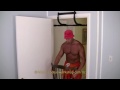 Pullup workout for the complete beginner who cant even do a single pullup. So many of us were needlessly traumatized in PE class because we couldnt do a single pullup. How stupid! PE classes are the precise place where they should be helping kids to get strong enough so they can do their first pullup. Teach rather than embarrass! Not rocket science. I’ll teach you how to do a pullup since your PE classes wont!!!
Pullups are one of the most important bodybuilding exercises you can do and this video shows you how to do them at home even if you have no place to do them. Pullups are the exercise that give your back that cobra like flare and they work your biceps too.
This is part of my continuing beginners bodybuilding series.
http://www.scoobysworkshop.com
Duration : 0:5:42
I go to the gym everyday and I used to do the same exercises everyday. arms legs abs all in the same day. I saw the change thrghout my body, my legs got really firm and i saw a lot of muscle as well as my arms and my waist got smaller too.
I heard it was better to train a specific part of the body in obe day and the next day a different part of the body should be trained.
I changed my workputand started doing this but all my muscles got smaller and diminish.
Which routine is better for my body?
The reason why your muscles might have weakened once you started training them only one time is because you were training them way more before. if you went to the gym three times a week and did abs.legs and arms each time and now you only do one each time you go you are exercising less.
it is good to do different sections for lifting at different times because then you give your body time to recover before you work out that area again.
still, try to keep up your amount of exercise… abs can basically be done everyday or every other day. do a little bit everyday and then the day you focus on your abs you Can make it more intense. with arms and legs once a week, maybe twice, is fine but make sure to do other exercises that would work those parts of your body as well.
running is key in exercise and really tones the legs. you can run three times a week and then lift different parts of the body on off days.
just mix it up and have fun so your body doesn’t plateau or you don’t get tired of the smae old thing.
good luck!
Please help me with this question !!!! PLEASE HELP!!!!!?
im 13, and iv been lifting for about 3 years now ,,and i need to get my legs stronger so i did some great legs exercises friday and drunk 2 scoops of my WHEY PROTEIN(68gs) of protein and i did my arms saturday and drunk 2 scoops of whey,,,Well her it is sunday and im still very very sore can some one tell me what i can do to help speed up the muscle recovery speed please!!! I worried because we run tomorrow a practice and i her it can mess up the muscle growth if you are using that sore muscle Group
If you’re extremely sore, try getting a muscle relaxant like Orphenadrine citrate prescribed to you. I don’t know by what brand name it comes in your place.
I have been workin out for 2 months. i’m watching what i eat and drinking plenty of water. i work out for 1 hr and now i started this week to workout 1 hr before work and 1/2 an hr after work. results are slow. i do 20 mins of cardio and 20 of weights and 20 of waist and stomach exercises for my 1 hr then for 30 after work i do 20 cardio and 10 stomach.
Im guessing that you are asking how to lose fat and the best way to tell you to do that is to bump up the cardio! Before you can tone your muscles you need to lose the fat that is stored on top of your muscles. Cardio and dieting are the best and quickest way to lose fat. I reccomend at least 30 minutes of cardio at a time, any less and your heart rate isnt really getting where it needs to be and you wont sweat as much and you wont burn the fat.
Once youve done that, you can start lifting weights to tone, but realize, spot reducing isnt possible. Weights will make your muscles stronger and your muscles will burn more calories. This is what will make you look lean.
Good luck!
So When I’m working out everything is fine until I am on my hands and knees and start doing leg raises to work the glutes. Anyway – when I do this, I get kind of like pins and needles in each foot/leg as I do a set for each. Can anyone tell me why this is happening and if its anything to worry about.
Thanks guys
as long as there is no pain associated with exercises, you’re good to go. When you’re doing leg raises, the blood is circulating back and fourth from you’re lower body, causing the pins and needles sensation. Personally, i think it’s nothing to worry about!
i’m not happy with the weight i’ve gained but i don’t know how to get rid of it. i don’t have the time to go out walking or go to a gym. what is the easiest way for me to get my weight under control from home?
That depends on what exercise equipment you have at home. I sometimes use an exercise bike. I f you don’t have equipment maybe walk up and down the stairs or if you do end up with extra time jogging is a good exercise.